Power LAB
Technologies: WordPress, WooCommerce, Elementor, PHP, JavaScript, CSS, ACF, B2BKing, Yoast SEO, WP Rocket, Cloudflare, Chat GPT, Adobe Photoshop, Illustrator, Figma, Artlist.
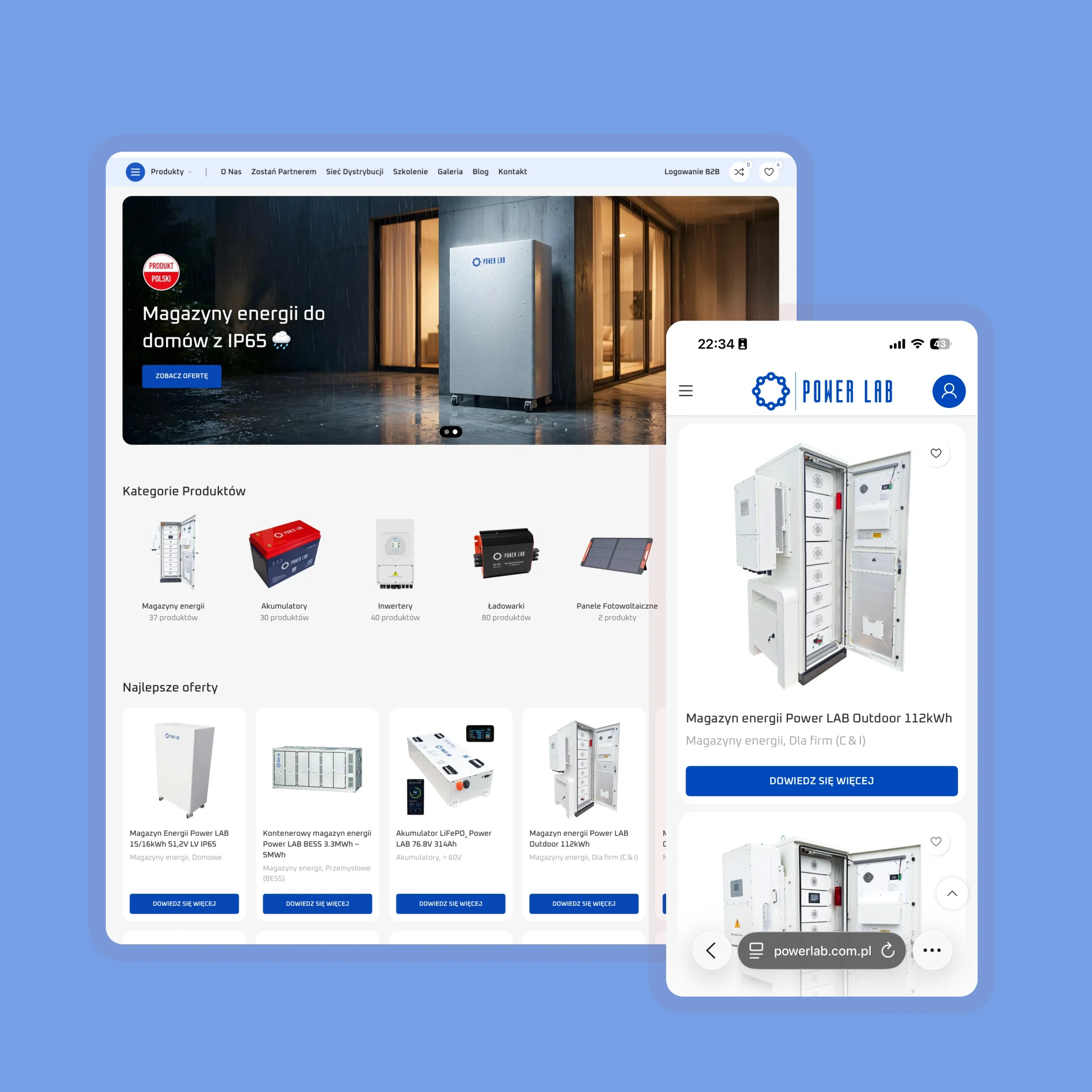
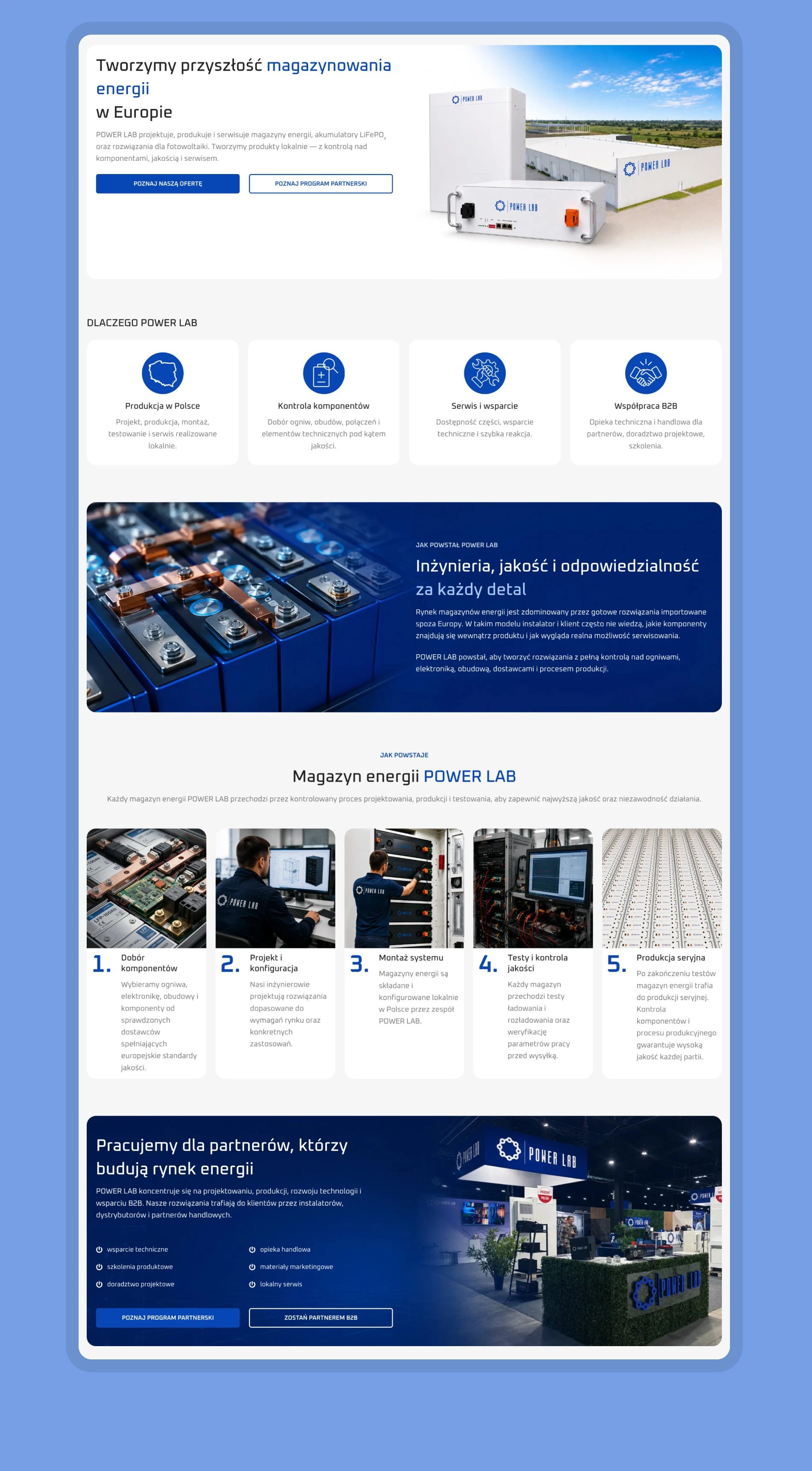
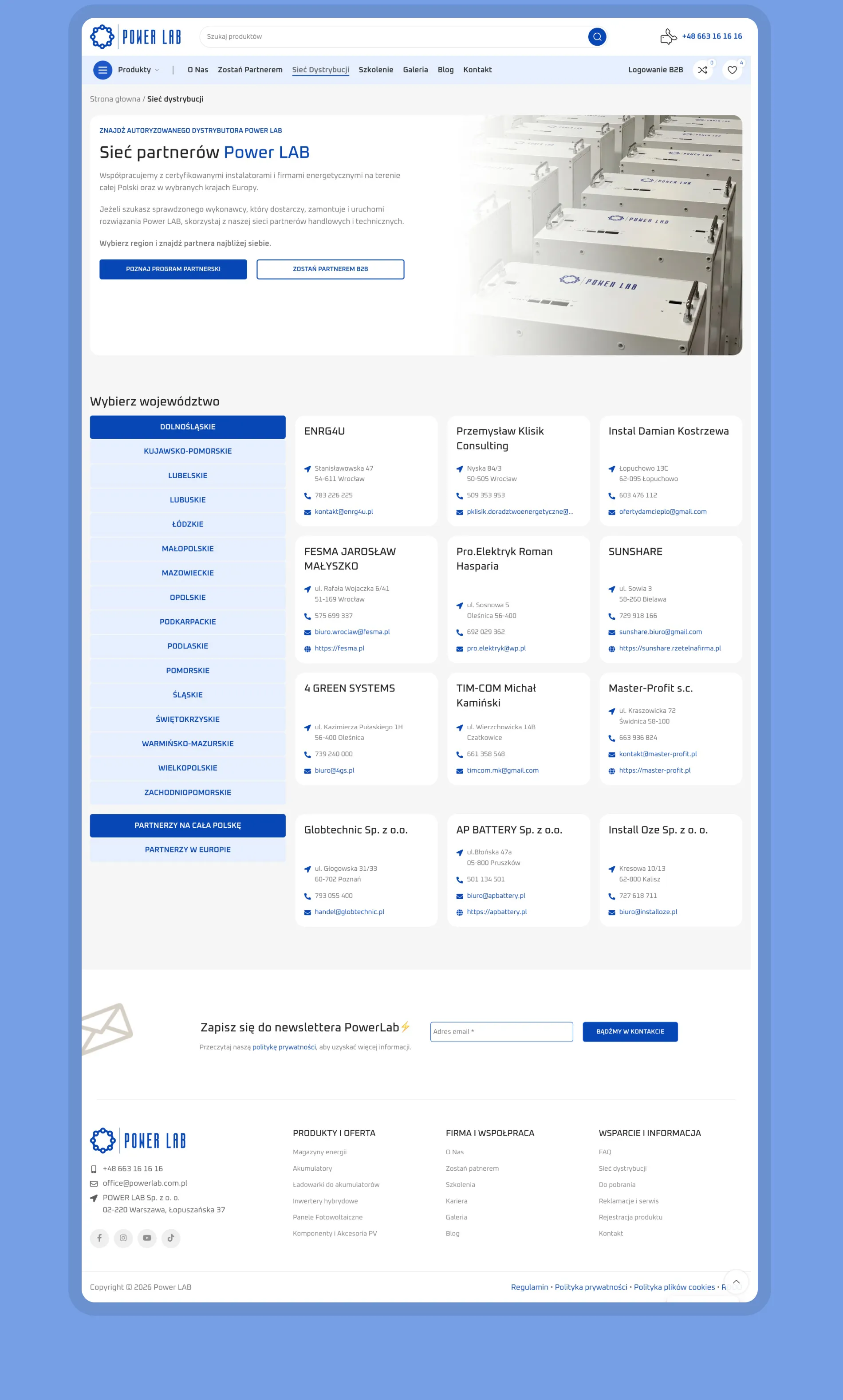
The project involved a complete redesign and ongoing development of the Power LAB website — a manufacturer of energy storage systems, LiFePO₄ batteries, chargers, and industrial energy solutions.
1. Website redesign and information architecture
- rebuilding and improving the existing WordPress website,
- developing a new information architecture and navigation structure,
- reorganising the WooCommerce product catalogue and category structure,
- adapting the website to support a growing range of residential and industrial energy storage systems,
- standardising the visual design, typography, colour palette, and reusable website components.
2. UX/UI and responsive design
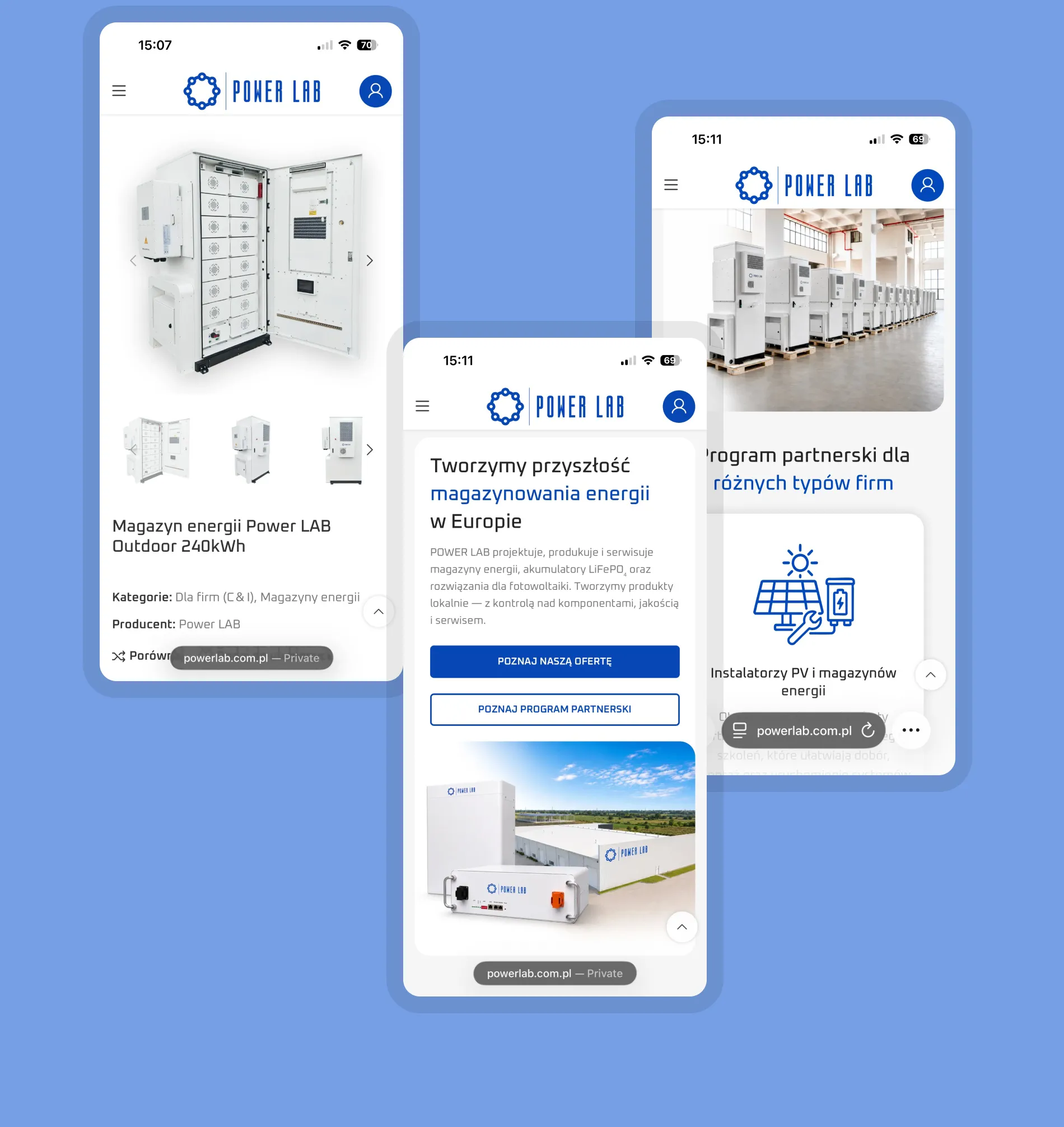
- designing and implementing desktop, tablet, and mobile layouts,
- improving content hierarchy, spacing, readability, and overall interface clarity,
- customising WoodMart and Elementor components,
- creating custom CSS styles,
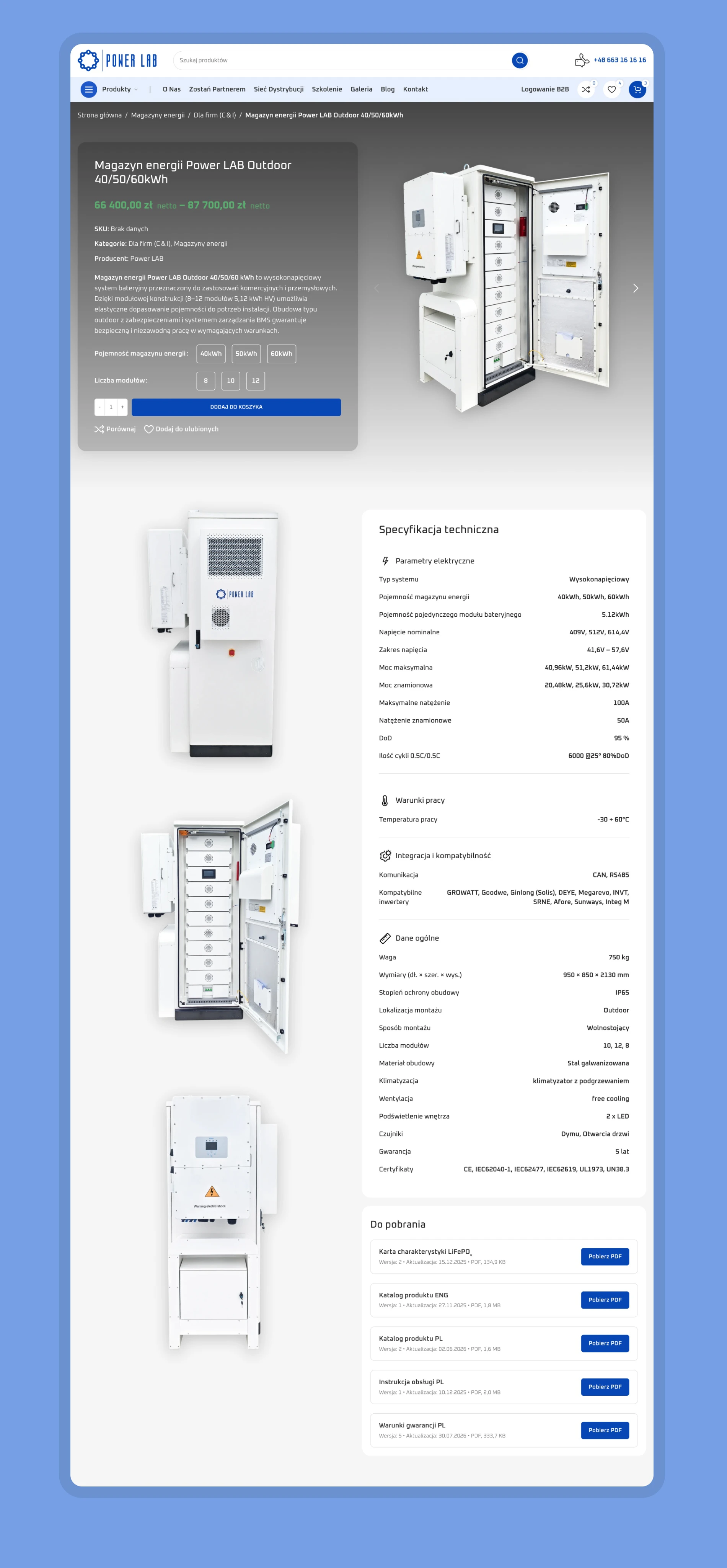
- improving product galleries, navigation, breadcrumbs, and product page elements,
- continuously refining the user experience based on real-world behaviour across different devices.
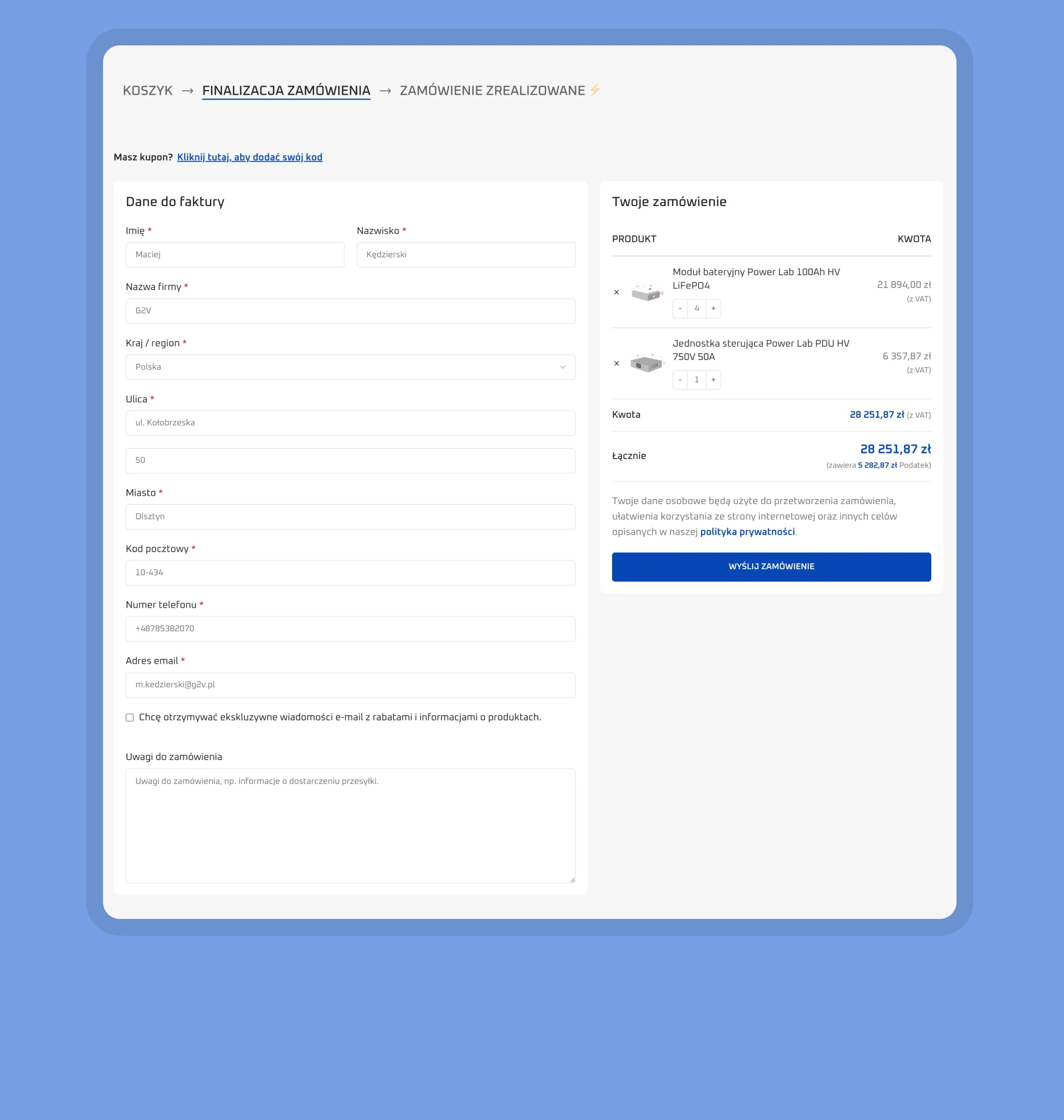
3. WooCommerce and B2B system
- developing WooCommerce as both a product catalogue and a B2B sales platform,
- organising product categories, product data, and technical specifications,
- improving the presentation of product parameters and technical documentation,
- configuring B2BKing,
- setting up partner registration and manual account approval,
- configuring discount groups and individual customer discounts,
- hiding prices from non-logged-in users,
- adapting the purchasing process to the company’s B2B sales model,
- improving and optimising product galleries, including variable products.
4. Custom WordPress development
- custom PHP, CSS, and JavaScript modifications,
- development of custom templates and shortcodes,
- integrations with ACF and WooCommerce,
- building custom functionality not available natively in the theme,
- developing a dedicated Downloads section with its own document structure, categories, search functionality, and product-document relationships,
- automatically displaying relevant technical documents on individual product pages.
5. Technical SEO, performance, and security
- ongoing technical SEO optimisation,
- improving indexing structure, URL organisation, and redirects,
- optimising website performance and loading speed,
- configuring caching and improving resource loading,
- diagnosing performance issues and server-side errors,
- protecting the website against unwanted traffic and bots,
- migrating DNS and implementing Cloudflare.
6. Product and technical content
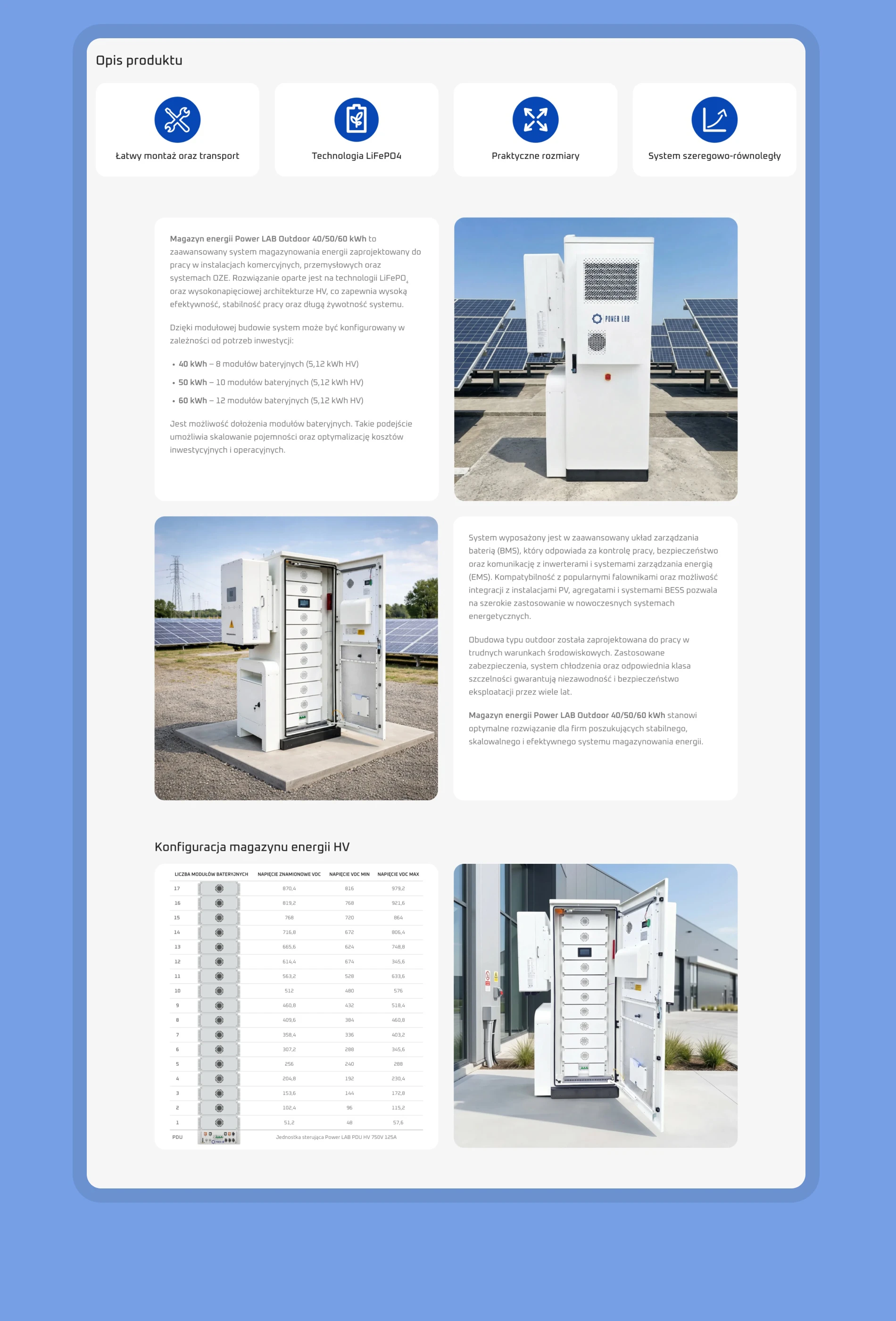
- writing and editing product descriptions,
- creating website content based on manufacturers’ technical documentation,
- organising and standardising technical specifications,
- standardising product, category, and document naming conventions,
- preparing content for new sections and landing pages,
- developing the technical documentation structure available directly from product pages,
- continuously updating the catalogue as the company’s product range expanded.
7. Graphic design, product photography, and AI-assisted visuals
A significant part of the project involved preparing visual assets for use across the website.
- creating graphics for sliders, banners, categories, and product sections,
- building visual compositions presenting the Power LAB product range,
- using AI tools to generate and modify marketing assets,
- creating slider graphics that presented multiple products within a single composition,
- generating missing visual elements with AI when suitable product photography was unavailable,
- combining real products with AI-generated environments or scenes while preserving the original appearance of the devices,
- improving the quality of technical product images supplied by manufacturers,
- removing unnecessary objects, labels, dimensions, and unwanted backgrounds,
- preparing product images on clean white or transparent backgrounds,
- adjusting and correcting colours in visual assets,
- creating alternative product views and angles using AI tools,
- adapting visual materials to the aspect ratios and formats required across the website.
A large proportion of the product and company photography was created without a professional photo shoot. Images were taken with a smartphone and then processed for website and marketing use.
The workflow included:
- light, colour, and contrast correction,
- background cleaning and alignment,
- removal of unnecessary elements,
- improving sharpness and overall image quality,
- retouching in Adobe Photoshop,
- extending or rebuilding image compositions with AI tools,
- preparing final images for use as product or marketing assets.
By combining original photography, Photoshop, and AI tools, it was possible to create consistent visual materials even when the source images had been taken in production environments or were not suitable for direct use on the website.
8. Ongoing development and maintenance
- continuously developing the website as the Power LAB product range expanded,
- implementing WordPress, WooCommerce, PHP, CSS, and JavaScript improvements,
- resolving issues caused by plugin, theme, and WordPress updates,
- adapting existing functionality to new business requirements,
- optimising website performance and visual consistency,
- developing new functionality and product catalogue components.
The Power LAB project covered the end-to-end development of the company website — from redesign and information architecture to WooCommerce, B2B functionality, custom WordPress development, technical content, performance optimisation, and visual asset production.
The scope of work combined UX/UI, WordPress development, WooCommerce development, frontend development, product content, technical SEO, website optimisation, and AI-assisted graphic design and photography.